The death of the sticky carpet pub has been predicted, mourned, and occasionally celebrated for years now, depending on who you ask. For some, it represents progress: cleaner floors, brighter spaces, better beer. For others, it feels like the loss of something quietly irreplaceable. And perhaps the truth, as with most things in pubs, sits somewhere in between.
The sticky carpet pub was never an aesthetic choice. It was a by-product of life lived hard and honestly within four walls. Spilled pints, muddy boots, nights that ran long, and mornings that came too early. The carpet didn’t stick because it was neglected; it stuck because it was used. Every mark told a story, even if no one ever bothered to write it down.
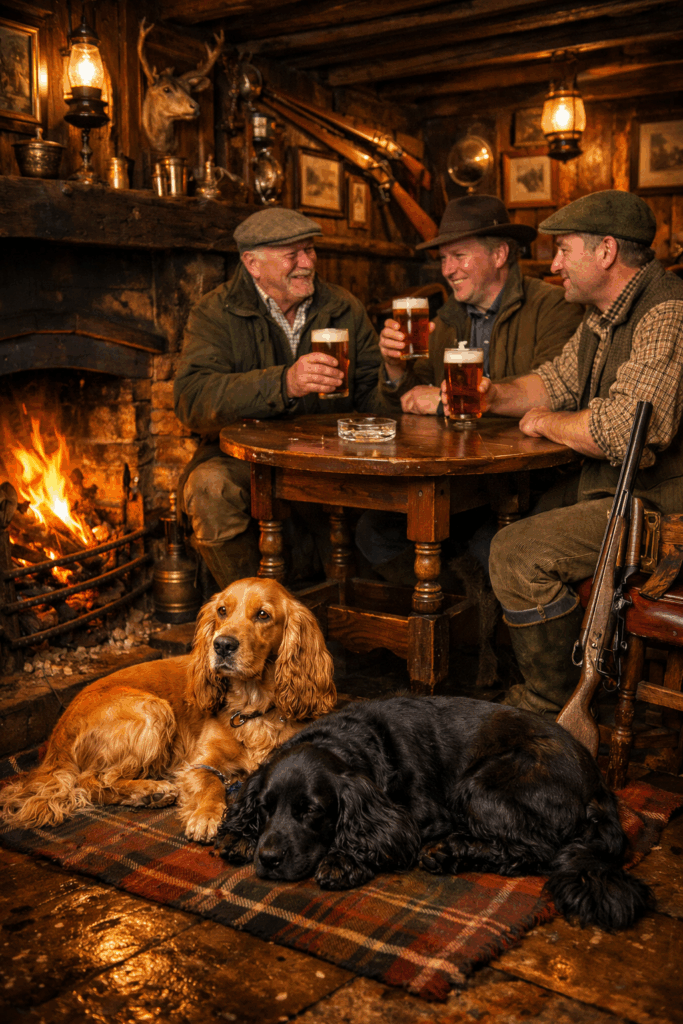
There was a comfort to those places that’s difficult to recreate. You could walk in straight from the field or the shoot, jackets still carrying the smell of damp wool and gun oil, boots caked in whatever the countryside had thrown at you that day. No one flinched. No one apologised. This was expected behaviour. The pub was there to absorb it all, much like it absorbed the noise, the laughter, and the quiet moments in between.
On winter afternoons, you’d find cocker spaniels stretched out in front of an open fire, ears twitching as they dried, oblivious to the conversation flowing around them. Their owners would gather nearby, hands wrapped around pints, recounting the day with the kind of detail that only emerges once the cold has left your bones. The pub wasn’t a destination so much as an extension of the day itself, a natural place to end up rather than somewhere you’d planned to be.
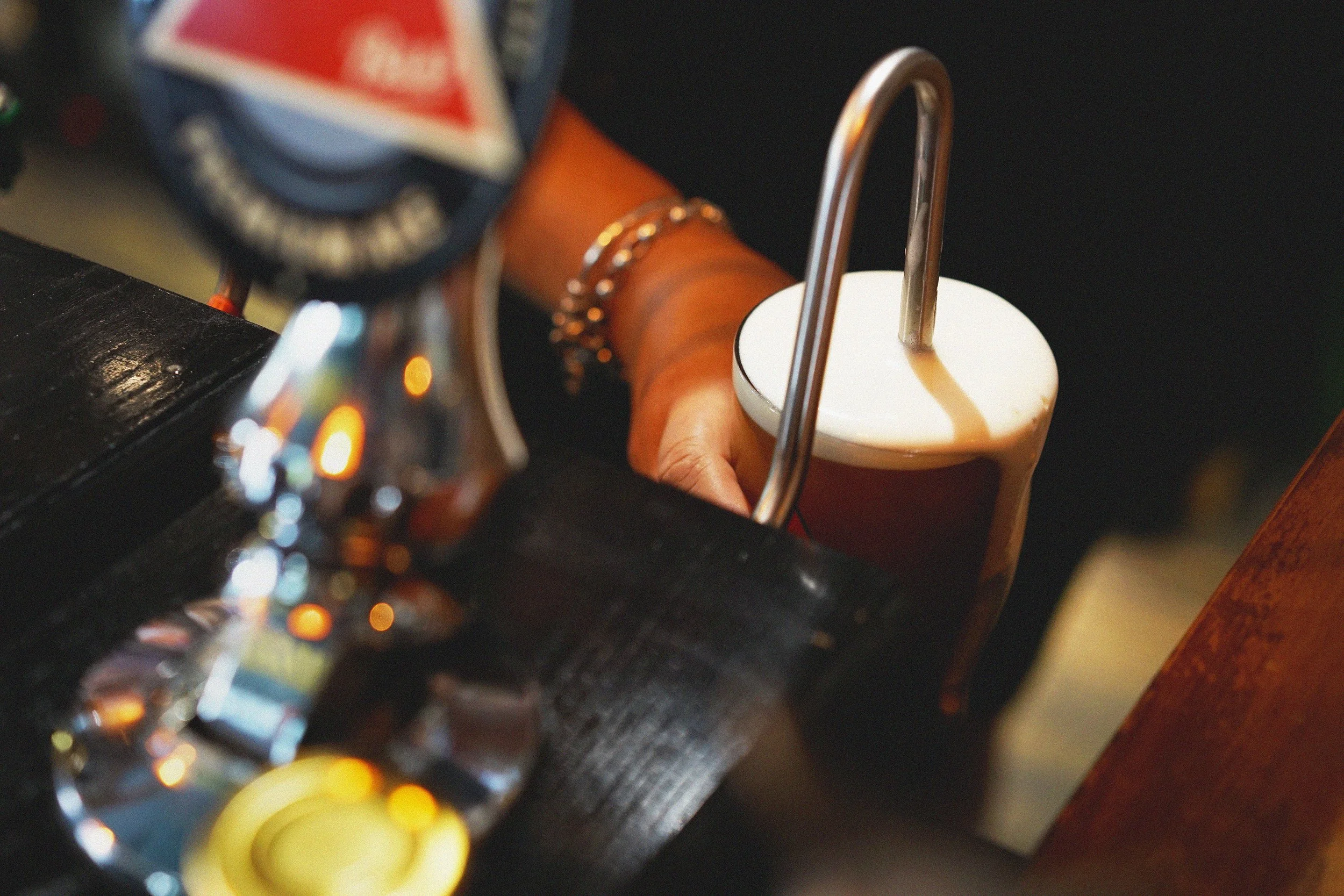
And then there was the bar staff, who knew the room better than anyone. They understood pace, mood, and when rules could be bent without breaking. If you were lucky, and known, you might be pulled a racing half. A quiet gesture of trust and generosity. No fuss, no announcement, just a nod and a glass that carried a little more than expected. These weren’t tricks for tourists; they were part of the pub’s internal language.
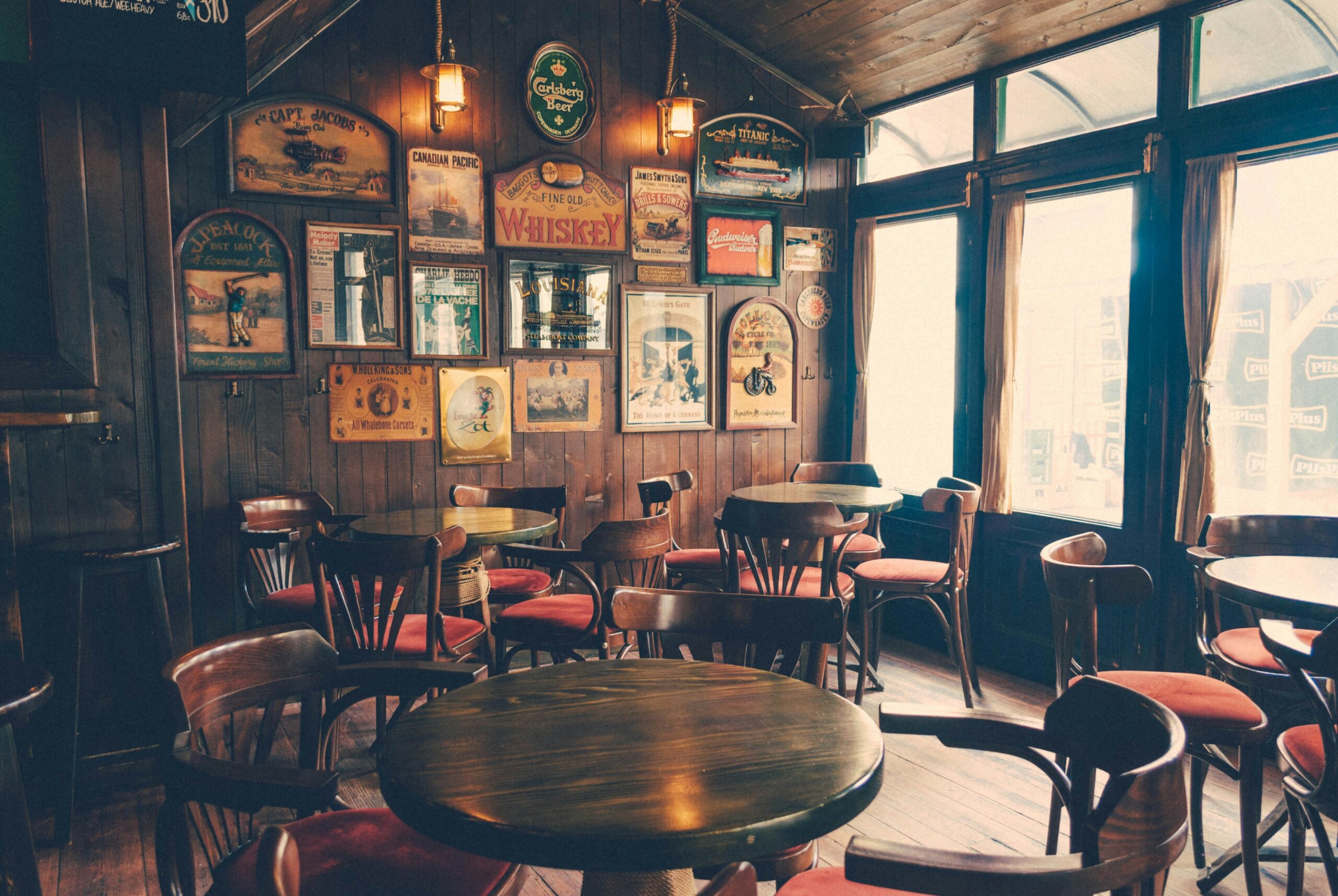
Today, many of those pubs are gone, replaced by spaces that are undeniably smarter. Wooden floors you can see your reflection in. Neutral colour palettes. Furniture chosen to match rather than to endure. There’s nothing inherently wrong with that, and for many landlords it’s been a necessary evolution. Cleanliness standards are higher. Expectations are different. The world has moved on.
But something changes when a pub stops expecting to be lived in. When dogs are no longer welcome near the fire. When muddy boots earn glances instead of shrugs. When the bar feels less like a gathering point and more like a service counter. The pub becomes something you visit, not somewhere you belong.
The sticky carpet pub thrived because it didn’t ask much of you. You didn’t need to dress up or book ahead. You didn’t need to justify your presence with a meal. You turned up, ordered a pint, and became part of the room. That simplicity is harder to find now, not because it’s impossible, but because it doesn’t always align with modern business models.
There’s also a danger in romanticising the past too much. Not every sticky carpet pub was a gem. Some were poorly kept, poorly run, and unwelcoming in their own way. Nostalgia has a habit of smoothing rough edges. Yet, even acknowledging that, there’s still something worth remembering about places that prioritised people over polish.
The shift away from these pubs reflects broader changes in how we socialise. Drinking at home is cheaper. Schedules are tighter. Expectations around food, comfort, and cleanliness have risen. Pubs have had to adapt or disappear. Many chose to adapt, and it’s unfair to criticise them for trying to survive.
Still, there’s a difference between improvement and sanitisation. When every pub begins to look and feel the same, something essential is lost. The sticky carpet pub was often fiercely individual. Its quirks were part of its identity. You knew where you were the moment you walked in, and you knew whether you belonged there too.
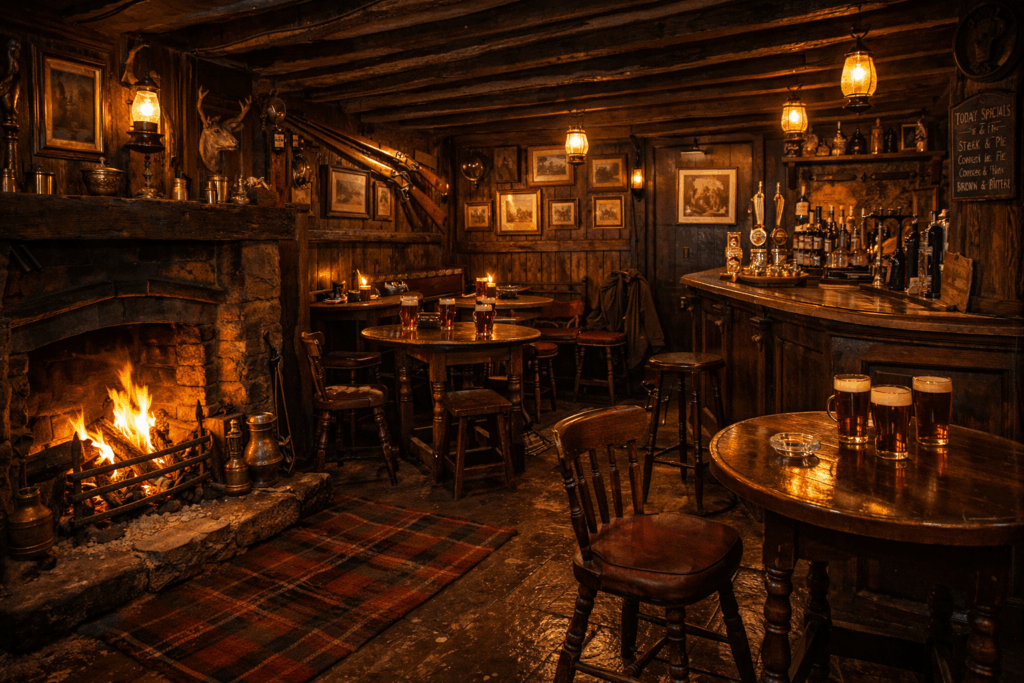
For shooting parties, farm workers, and rural regulars, these pubs were more than watering holes. They were meeting points, debrief rooms, and social anchors. They absorbed the rhythms of countryside life without judgement. Removing that kind of space leaves a gap that isn’t easily filled by modern alternatives.
The racing half, too, speaks to a different relationship between pub and patron. It relied on trust, familiarity, and a shared understanding of boundaries. In an age of strict measures and surveillance, that kind of informal generosity feels increasingly rare. Its disappearance isn’t about alcohol units; it’s about the loss of human discretion.
So should we be sad about the death of the sticky carpet pub? Sadness might not be the right word. Perhaps we should be reflective. Aware of what’s been gained and what’s been lost. Cleaner floors and better facilities are welcome, but they shouldn’t come at the cost of warmth, character, and belonging.
The challenge for pubs now is to carry forward the spirit of those places without pretending time has stood still. You don’t need sticky carpets to create a lived-in atmosphere, but you do need to allow for mess, noise, and humanity. You need to make room for dogs, for muddy boots, for stories told more than once.
The sticky carpet pub may be fading, but its legacy doesn’t have to disappear with it. If we remember what made those pubs special — the generosity, the tolerance, the sense of shared space — then perhaps the future pub can be cleaner without being colder. And if, every now and then, someone is quietly poured a racing half, well, that wouldn’t be the worst tradition to keep alive.