Carlsberg’s traditional “core” beer brands have fallen below half of total sales for the first time, marking a significant shift in the Danish brewer’s business mix, according to reporting by the Financial Times.
Speaking to the FT, Carlsberg chief executive Jacob Aarup-Andersen said the company would remain a brewer at heart, even as changing consumer habits push growth elsewhere. He pointed to moderation as a major global trend, which has accelerated Carlsberg’s expansion into soft drinks, including brands such as Pepsi. Beer, he insisted, would “continue to be a major driver of relevance” for the group.
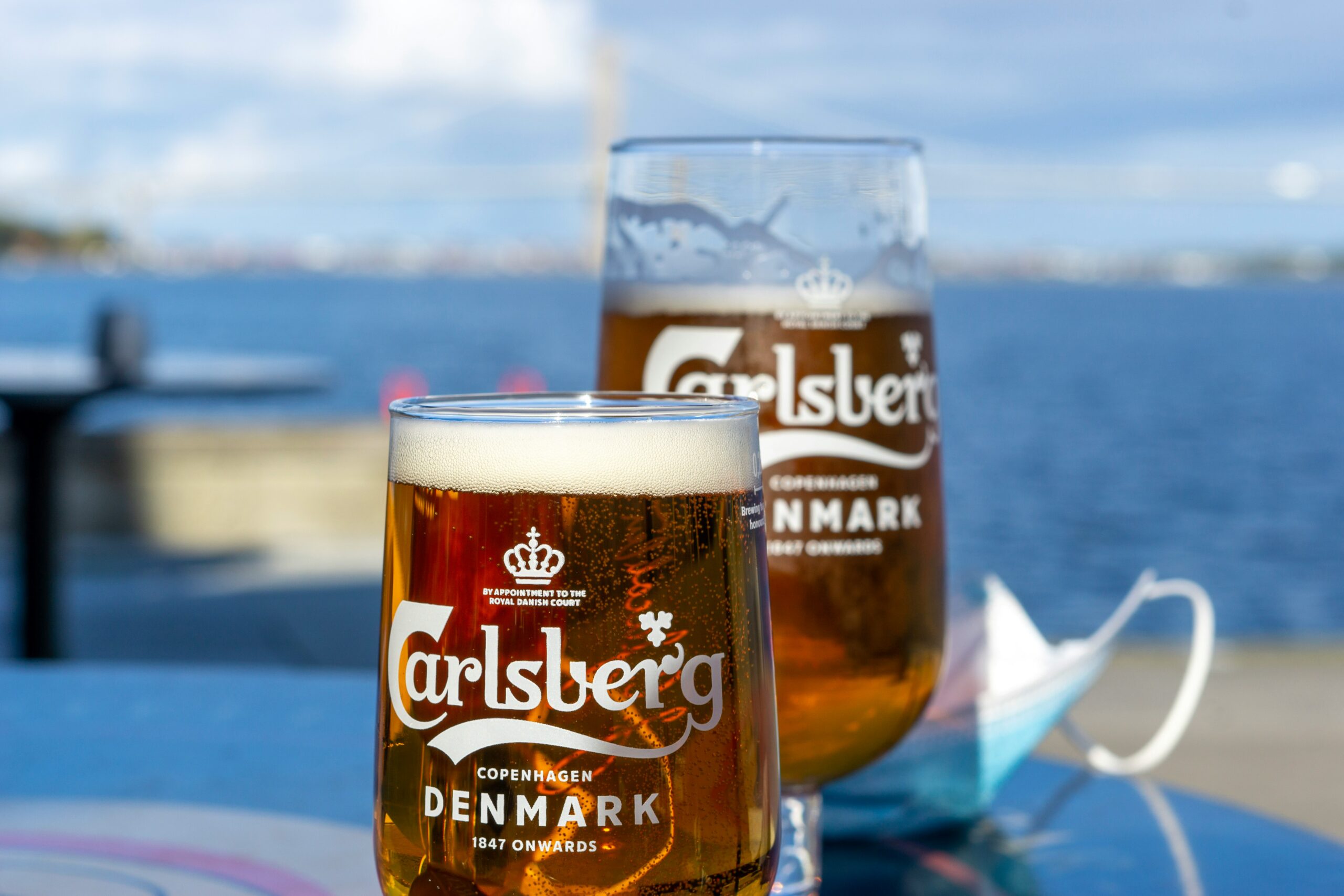
In 2025, Carlsberg’s core beer brands — local, mainstream labels such as Falcon, Karhu, and Angelo Porretti — accounted for just 49 per cent of total sales, down from 59 per cent a year earlier. Meanwhile, soft drinks and non-alcoholic beer now make up around a third of revenues. Premium beer brands, including Carlsberg, Tuborg, and Kronenbourg, contribute roughly a fifth, alongside other alcoholic drinks such as cider and hard seltzers.
Founded in 1847, Carlsberg has been the most aggressive of the global brewers in diversifying beyond beer. Its 2025 acquisition of Britvic nearly doubled its UK soft drinks business, lifting the category to just under 30 per cent of group sales. That strategy has helped Carlsberg outperform rivals AB InBev and Heineken on both volume growth and margins over the past five years.
Analysts at Bernstein told the FT that Carlsberg achieved underlying volume growth of 1.8 per cent per year between 2019 and 2024, compared with 0.5 per cent at AB InBev and a 0.8 per cent decline at Heineken. Carlsberg was also the only one of the three to improve underlying margins, increasing them by 0.7 percentage points over the same period.
Aarup-Andersen said his ambition was to build a “structurally higher growth” business that could accelerate once global consumer confidence recovers. However, he acknowledged that inflation, geopolitical uncertainty, and weak consumer sentiment remain significant headwinds. He added that the shift away from core beer brands is likely to continue, driven by faster growth in soft drinks and non-alcoholic beer.
The 48-year-old chief executive joined Carlsberg after leading ISS, following a decision by Denmark’s financial regulator in 2018 to block his appointment as CEO of Danske Bank amid concerns over banking experience. He told the FT that approaching Carlsberg as an outsider allowed him to challenge long-held assumptions about consumer behavior and category growth.
Carlsberg now expects modest improvements in consumer confidence later this year, though Aarup-Andersen noted outcomes will depend heavily on geopolitical developments, including the war in Ukraine and evolving US trade tariffs. The group has minimal exposure to the US market and exited Russia — once a major source of profits — following the full-scale invasion of Ukraine.