Betty Stogs from Skinner’s Brewery is more than just a beer. For many of us in Cornwall, it is a proper part of the landscape. It is one of those names that has been around for years, a beer that feels stitched into pub counters, coastal walks, pasty lunches, summer evenings and the kind of Cornish pride that never needs to shout too loudly. So to see Betty Stogs back, revived under the stewardship of Goodh Brewing and carrying the Skinner’s name forward again, feels genuinely brilliant.
Watch my full review on YouTube below:
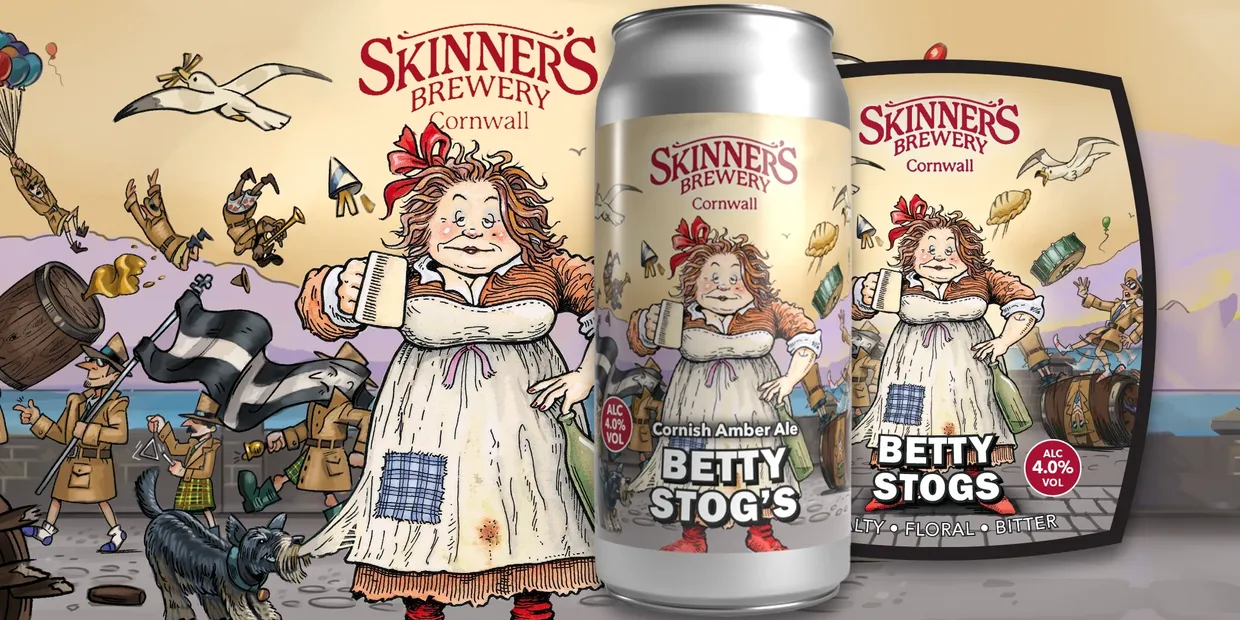
This is a 4% brazen Cornish bitter, or amber ale if we are being slightly more technical, and straight away the can reminds you why Skinner’s always had such a strong identity. The branding is full of character, humor and proper Cornish energy, with Betty herself looking ready to take on the world with a tankard in hand. It is playful, bold and wonderfully local, which is exactly what this beer should be. Skinner’s was always beer first, but with strong Cornish roots running right through it, and as a Cornishman, that is something I absolutely love to see back on the shelf.
In the glass, Betty Stogs pours with a lovely amber tone and a lively carbonation. I know some people will say a bitter should not be served too cold, but I must admit, I rather like mine chilled, and from the first sniff this had me smiling. There is a light malt aroma, but also a floral lift that gives it real charm. I do not want to get too carried away, but it honestly has something of a Cornish coastal walk about it, that mix of fresh air, heather, sea breeze and summer warmth. Dramatic? Possibly. True? To my nose, absolutely.
On taste, Betty Stogs does exactly what a proper bitter should do. You get that hit of bitterness up front, sharp enough to let you know it means business, but never in a harsh or unpleasant way. There is a little grapefruit edge in there, not in the punchy IPA sense, but more as a bright citrus bite that lifts the beer nicely. Then, just when you think it is going to run dry, it rounds itself off with a gentle sweetness and a soft biscuit malt note that brings everything back into balance.
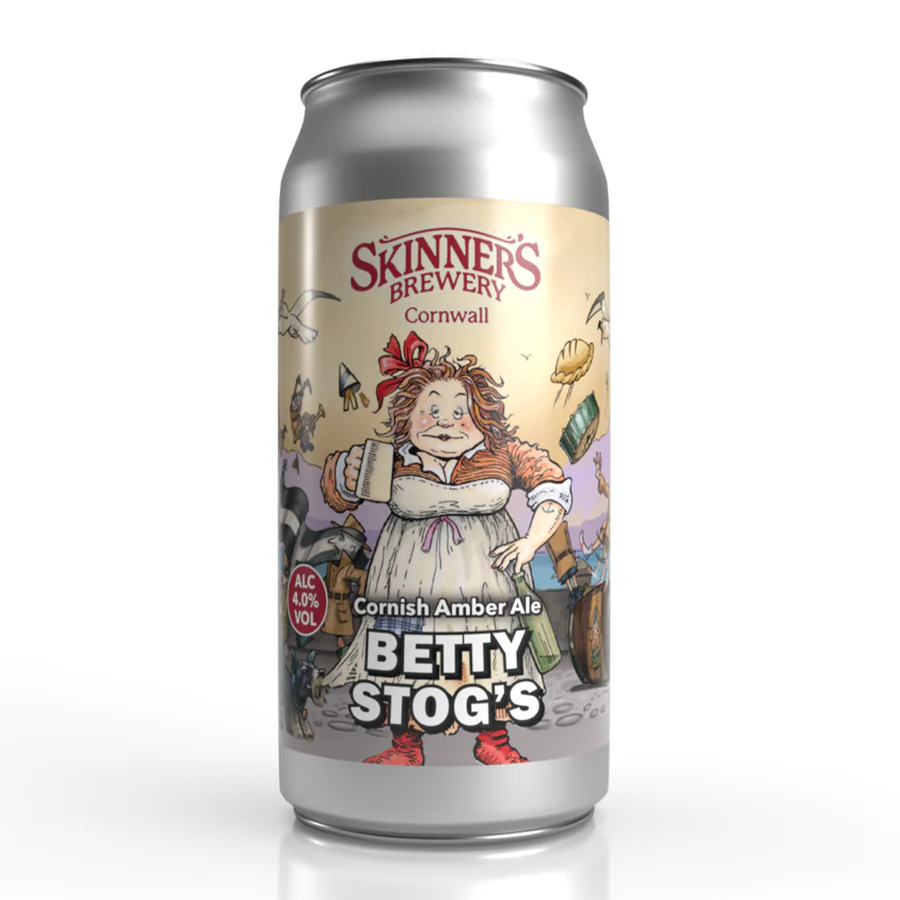
That is what I really enjoyed about this beer. It takes you on a proper bitter journey. It starts with that crisp, floral bitterness, moves across the palate with a bit of bite, then finishes with a sweeter, maltier lift that makes you want to go back for another sip. It is not heavy, and it is not trying to be clever for the sake of it. It is just a well-made, honest bitter with enough character to keep you interested.
There is also something refreshing about seeing the word bitter used proudly again. Somewhere along the line, bitter became a term some breweries seemed to shy away from, as though calling something a “real ale” made it more acceptable. But bitter is not a dirty word. It tells you what you are getting. It is a style with heritage, with backbone, and when it is done properly, it can be absolutely delicious. Betty Stogs is exactly that kind of beer.
For me, this is a true traditional bitter. It has that classic feel, the sort of pint your dad or granddad might have ordered, and I mean that as a huge compliment. These are the beers that built pub culture in many ways, and it is great to see one with such Cornish history still standing. In fact, Betty Stogs has always felt like one of the standards by which Cornish bitters are judged. It is familiar, dependable and full of character.
If I had one small criticism, I would say I would personally have liked just a touch more maltiness. My memory of Betty Stogs from years ago, especially on cask, was perhaps a little richer, although that may well be nostalgia doing what nostalgia does best. There is still a nice biscuit note here, but I would not have minded a bit more body and malt depth. That said, if I wanted something heavier and darker, I would reach for a different beer altogether. Betty Stogs has its own job to do, and it does it well.
At 4%, it is also very drinkable. This is not one of those lower-strength beers that leaves you searching for flavour. There is plenty going on, with bitterness, citrus, floral notes, biscuit, a little savoury umami character and enough mouthfeel to make it satisfying. It is moreish in the best way, the kind of beer that feels just right when the sun is out and you have nowhere better to be.
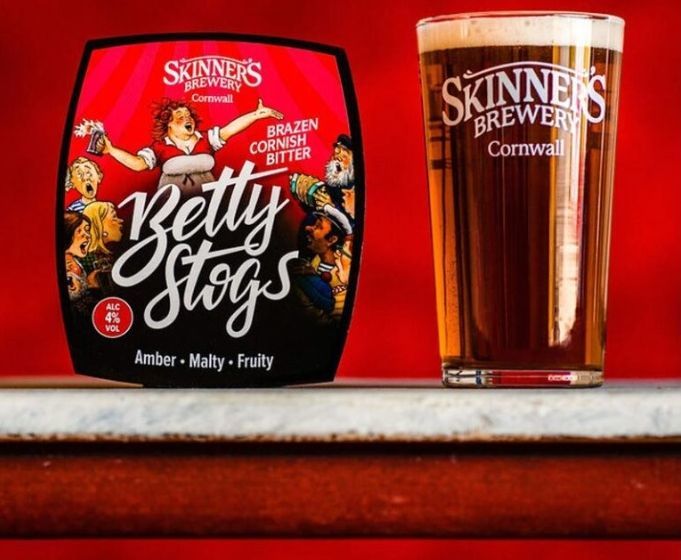
Food-wise, the can suggests stews and pasties, and I can absolutely see why. A proper Cornish pasty would work beautifully with this, especially with the meat, potato and swede playing into that sweet and savoury balance. But I would also take this somewhere more coastal. Give me fresh mackerel cooked on a beach barbecue, wrapped in foil with a little butter, and a cold Betty Stogs in hand. That, for me, is where this beer would sing.
It would also work surprisingly well with something like chicken and pearl barley broth, which may sound slightly mad to some, but hear me out. That earthy, grainy, savoury depth would pair really nicely with the bitterness and gentle malt character of the beer. It is a beer with enough traditional backbone to sit next to comforting food, but enough freshness to work in the sunshine too.
Ultimately, Betty Stogs is not just a returning beer. It is a returning piece of Cornish brewing culture. There was a moment when it looked as though beers like this might disappear, and that would have been a real shame. So seeing Skinner’s back, and seeing Betty Stogs available again in cans and cask, feels like something worth celebrating.
Is it perfect? Perhaps not quite. Would I like a little more malt? Yes, I would. But does it still taste like a proper Cornish bitter with history, personality and enough charm to make you smile? Absolutely. Betty is back, and frankly, it is lovely to see her again.